A hall, then a tower
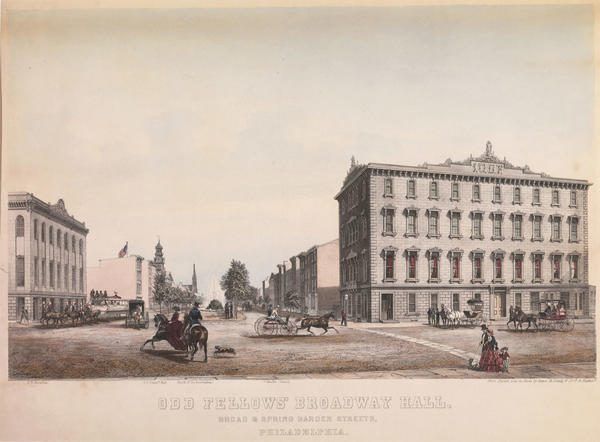
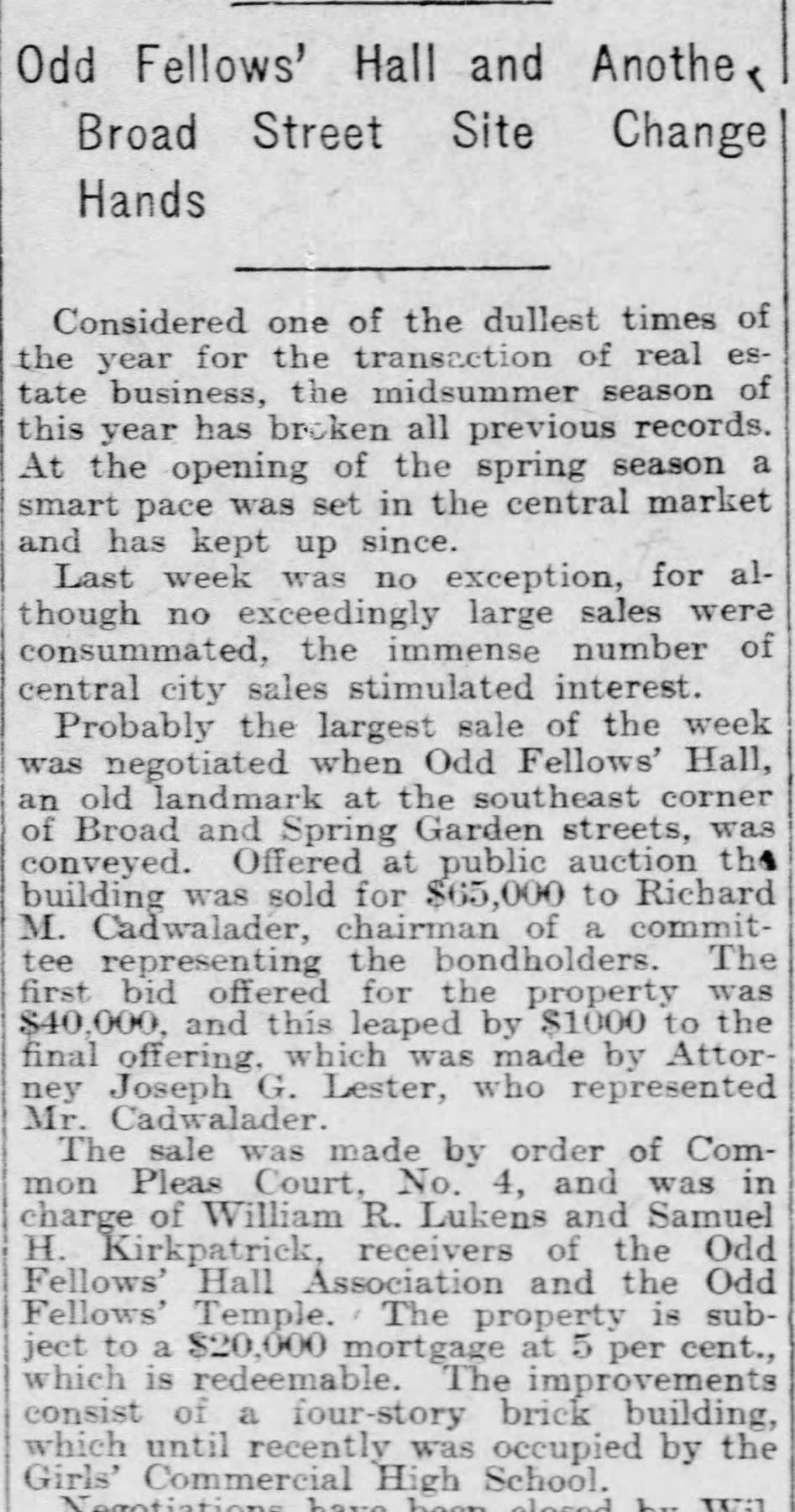
For most of the nineteenth century this corner was Odd Fellows’ Broadway Hall — a four-story brick lodge that later housed the Girls’ Commercial High School. In August 1909 the hall went to public auction. Henry Charles Lea, the Philadelphia publisher and historian whose fortune was mostly city real estate, took title for $65,000. The lot was about 53 feet on Broad by 100 feet deep. The Inquirer guessed he would build a large garage, like one he had put up on Broad above Race. Lea died that October. His estate did not build a garage.
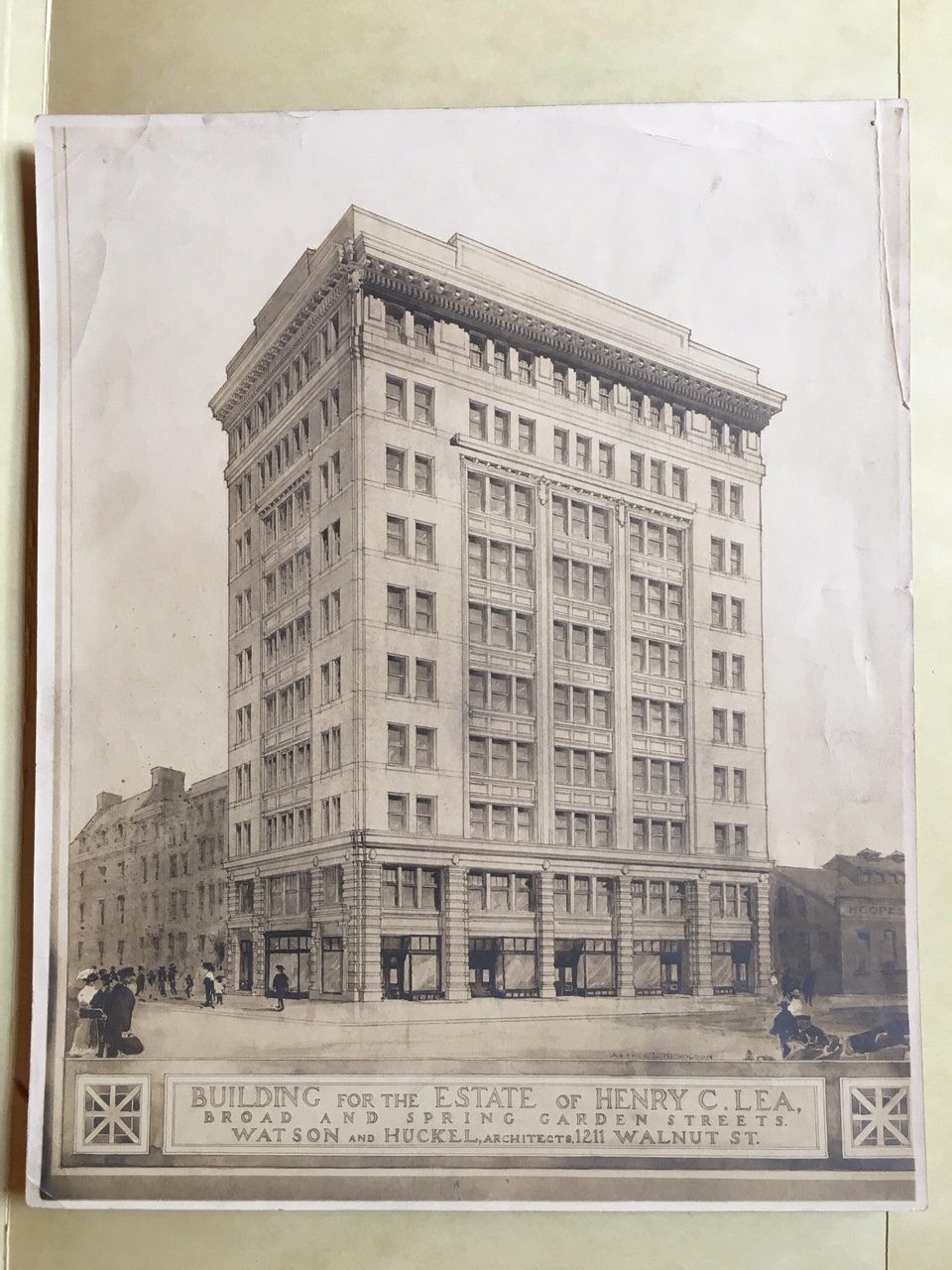
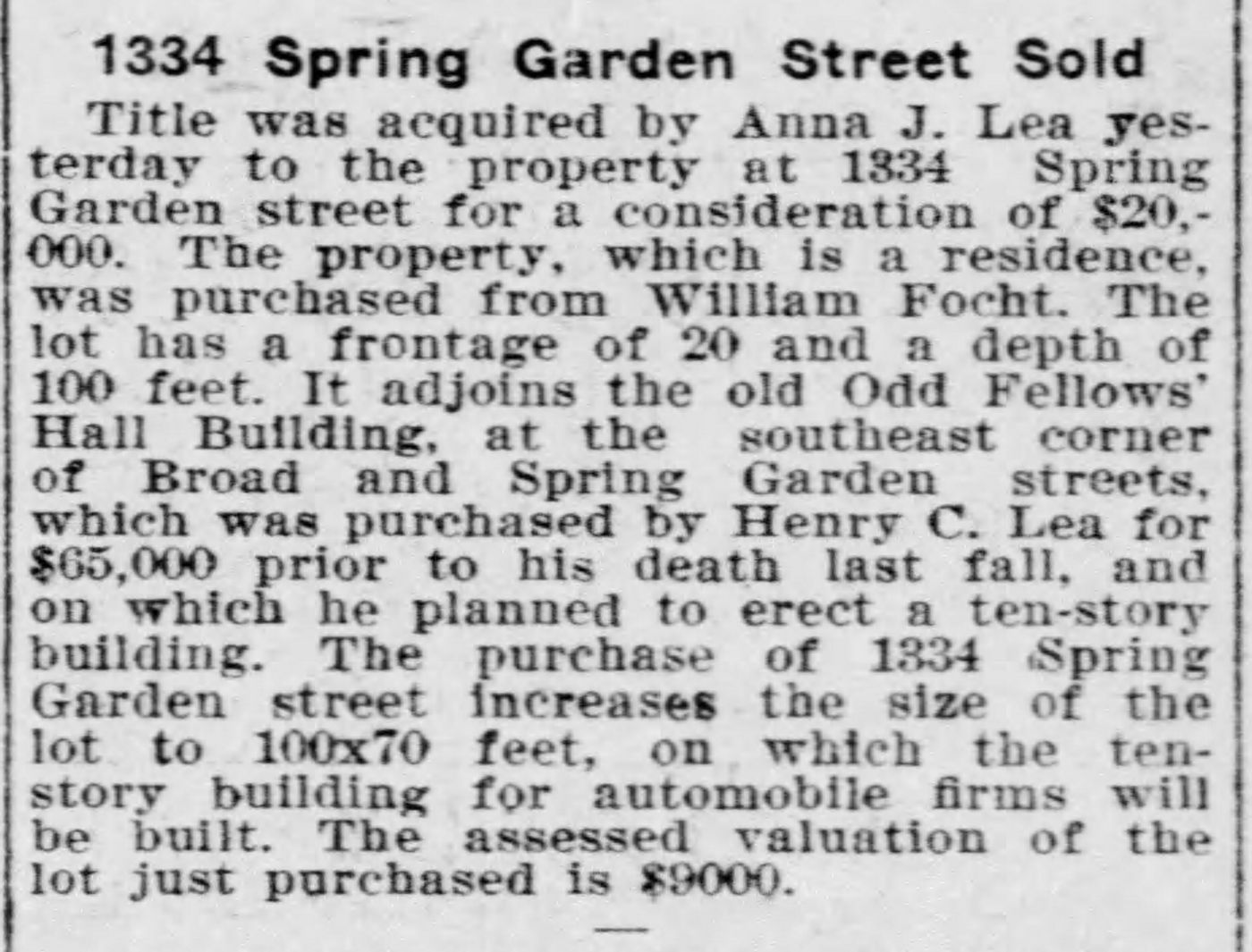
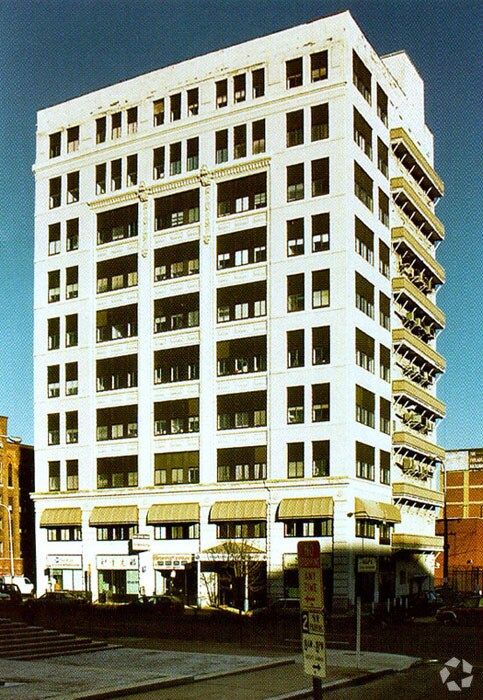
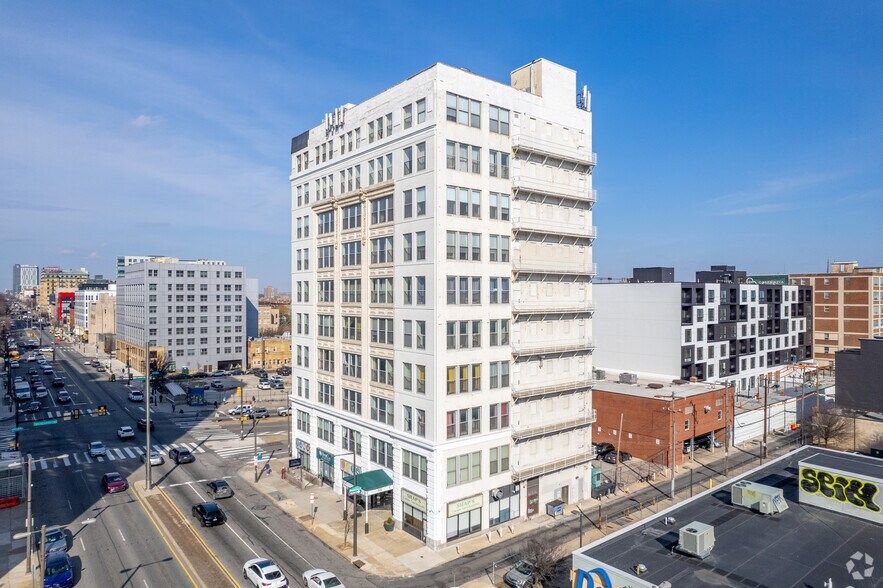
Two months after his death, Watson & Huckel finished plans for a ten-story fireproof building of steel and concrete: passenger and freight elevators, steam heat, electric light and power, sprinklers, and open manufacturing floors with no posts. In February 1910 Anna J. Lea bought 1334 Spring Garden so the lot could grow. By June the Inquirer reported Roydhouse, Arey erecting the tower for the estate — about $205,000, a lot 100 feet 3 inches by 73 feet 2¼ inches, stores on the first floor, light manufacturing above, three elevators. The Broad Street and Spring Garden elevations (HSP, job 287, sheets 4 and 5) still show the storefronts and the Spring Garden entrance. The tower that went up is the one we live in.
Broad Street auto row, mills upstairs
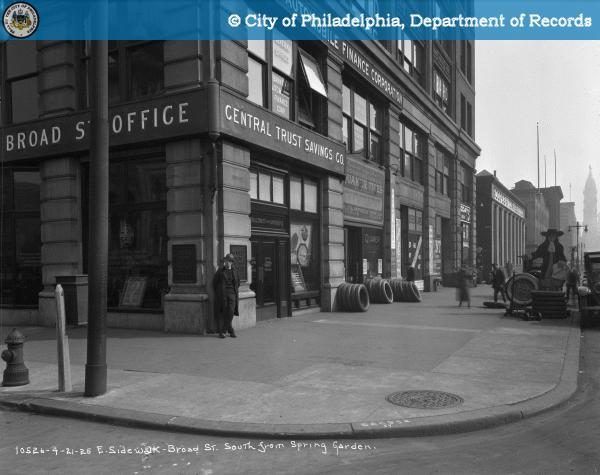
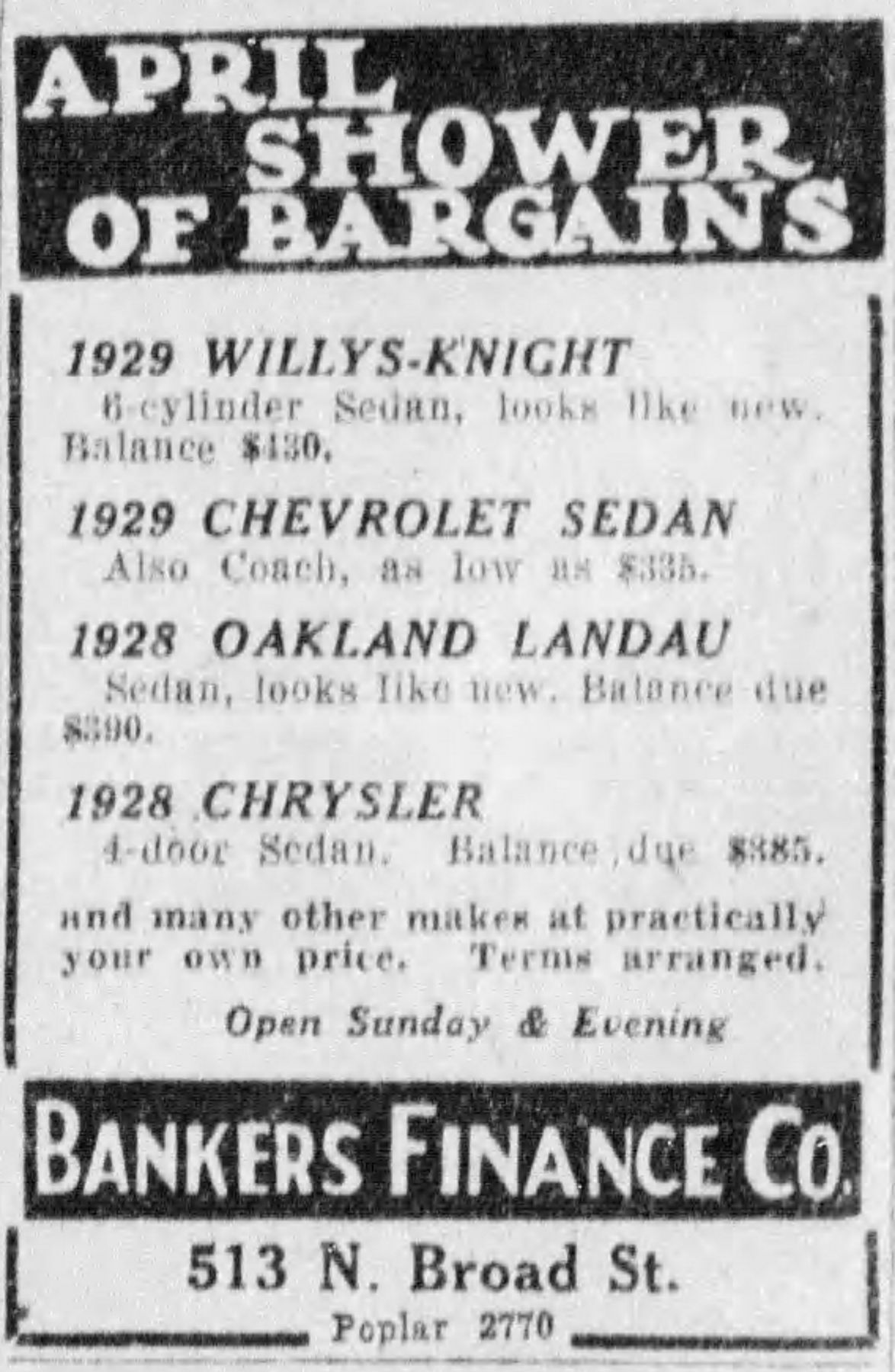
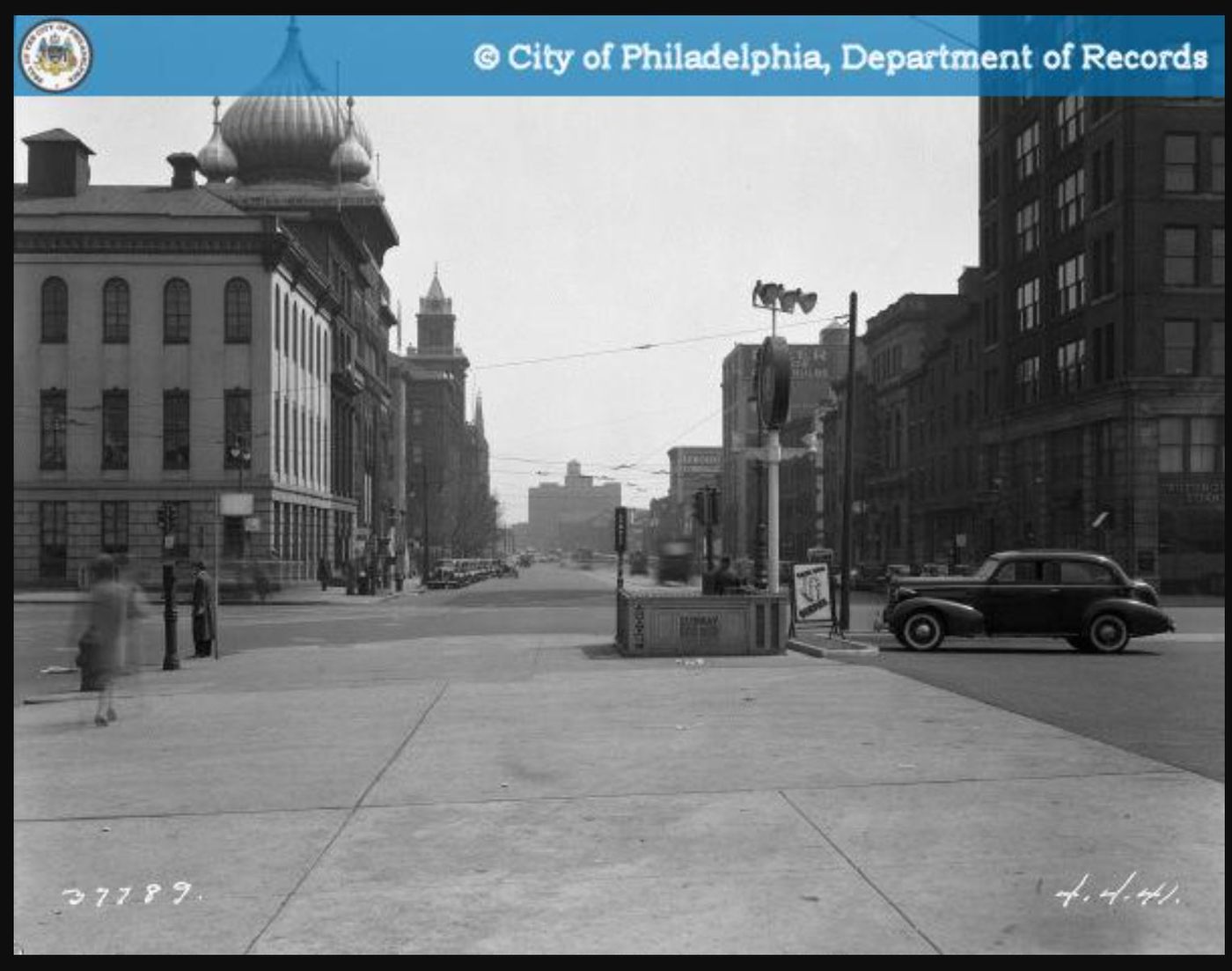
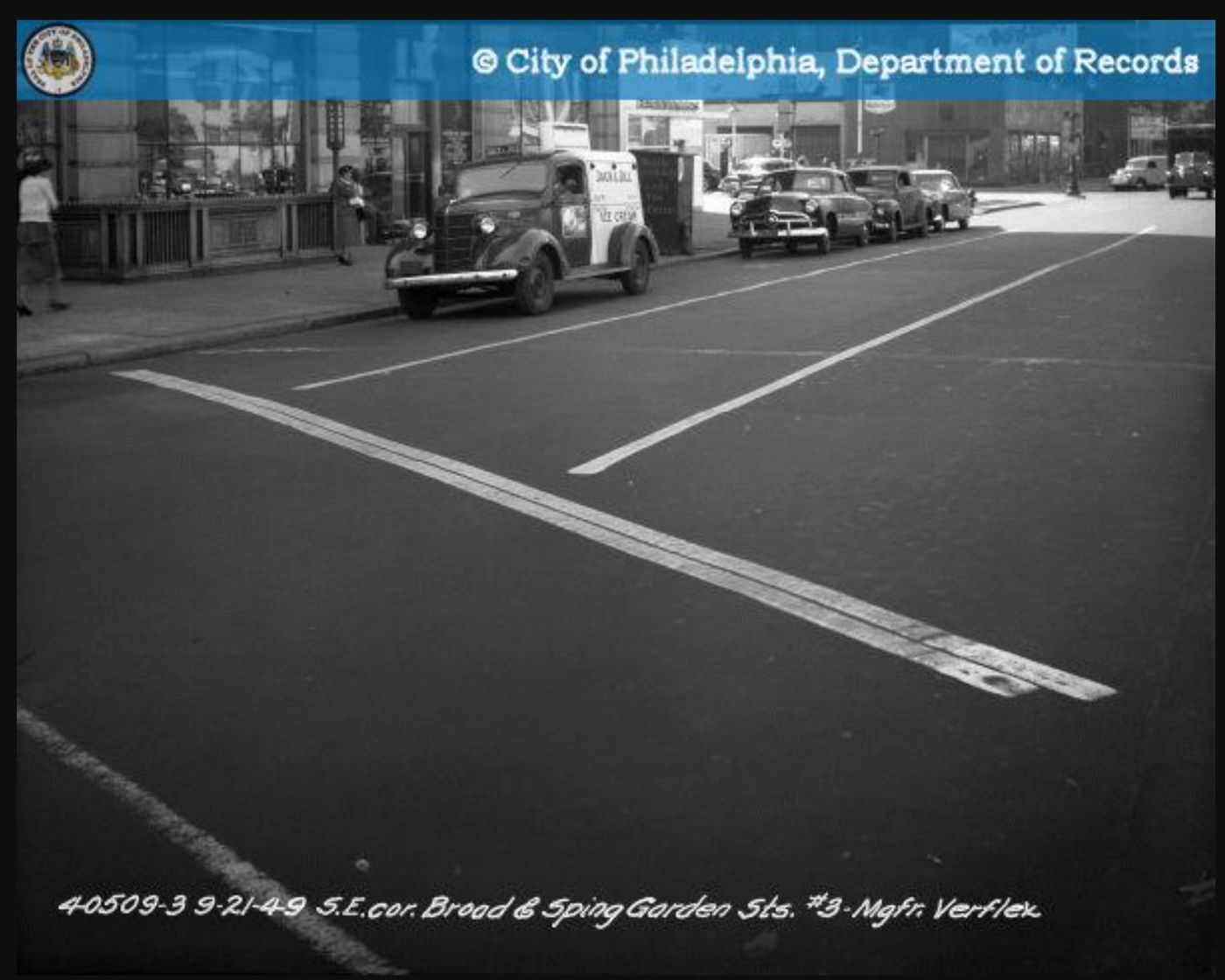
Street numbers 511 through 519 were never separate buildings. They were this one façade. Diamond Rubber, then B. F. Goodrich, took 519 (Goodrich ads also listed 517–519). McClintock Tire sat at 517. SAFE. advertised tires at 511 — “four doors below Spring Garden.” Bankers’ Auto Finance sold and refinanced cars from 513, “opposite Baldwin’s.” Central Trust put a Broad Street office in the corner store. Cosmos Finance wrote auto loans on the second floor. Out front, the subway was still being built in the 1920s; by 1941 a kiosk stood in the intersection.
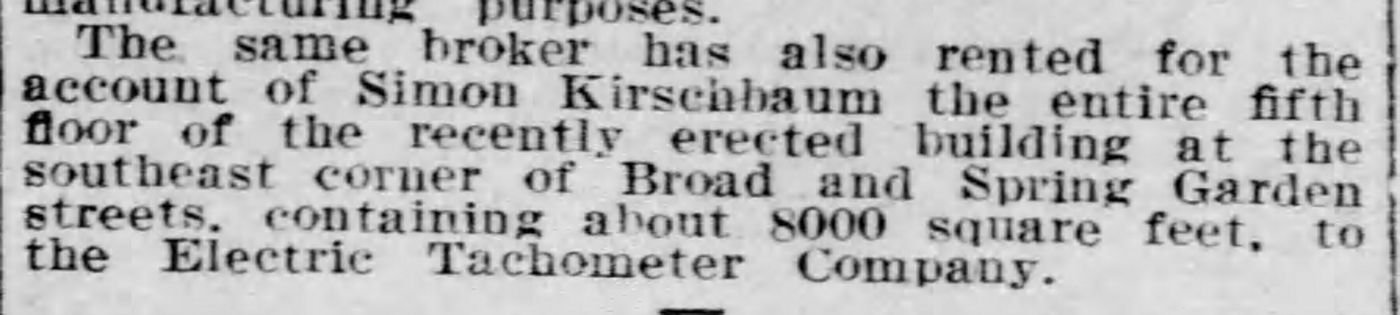
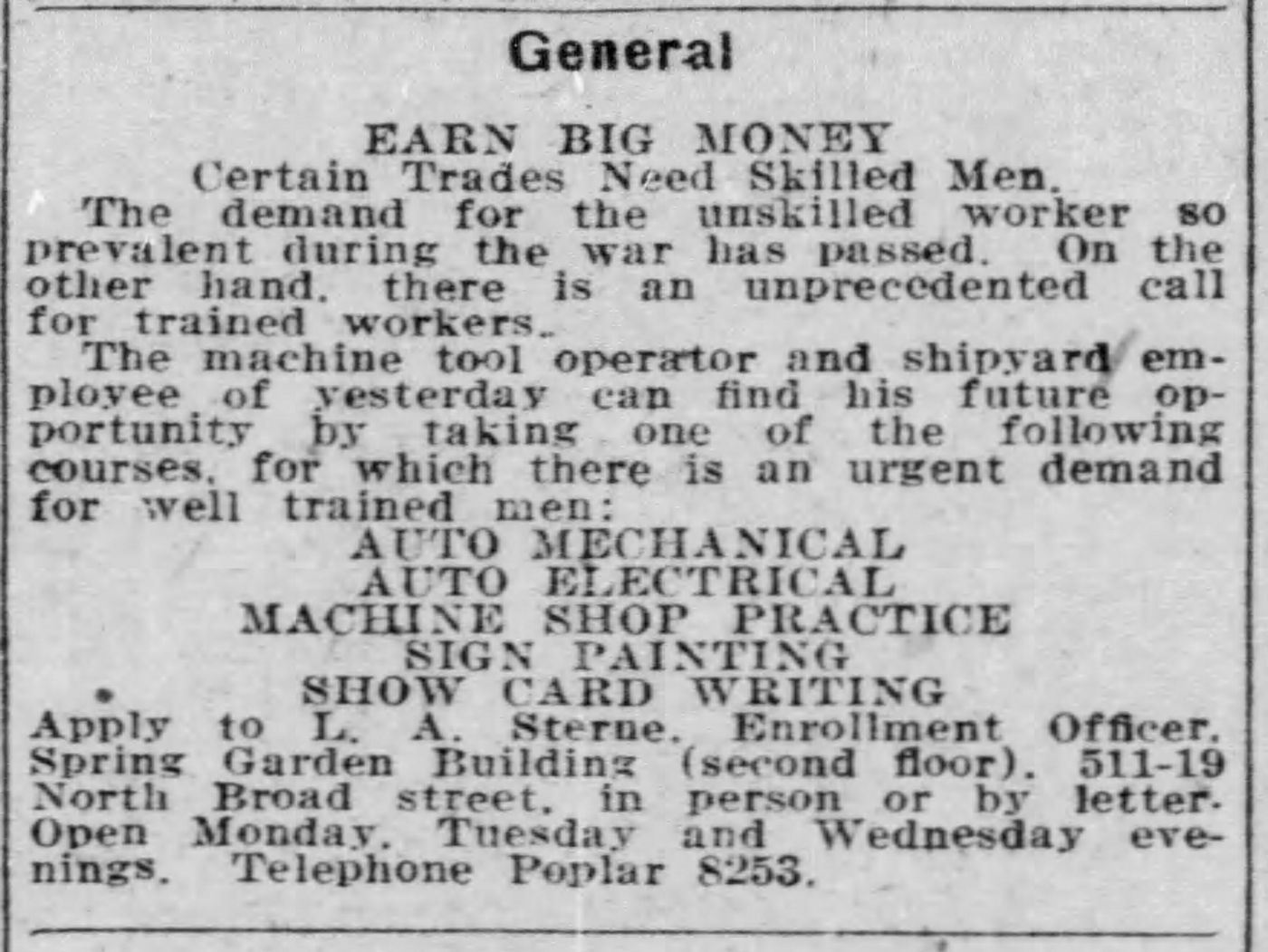
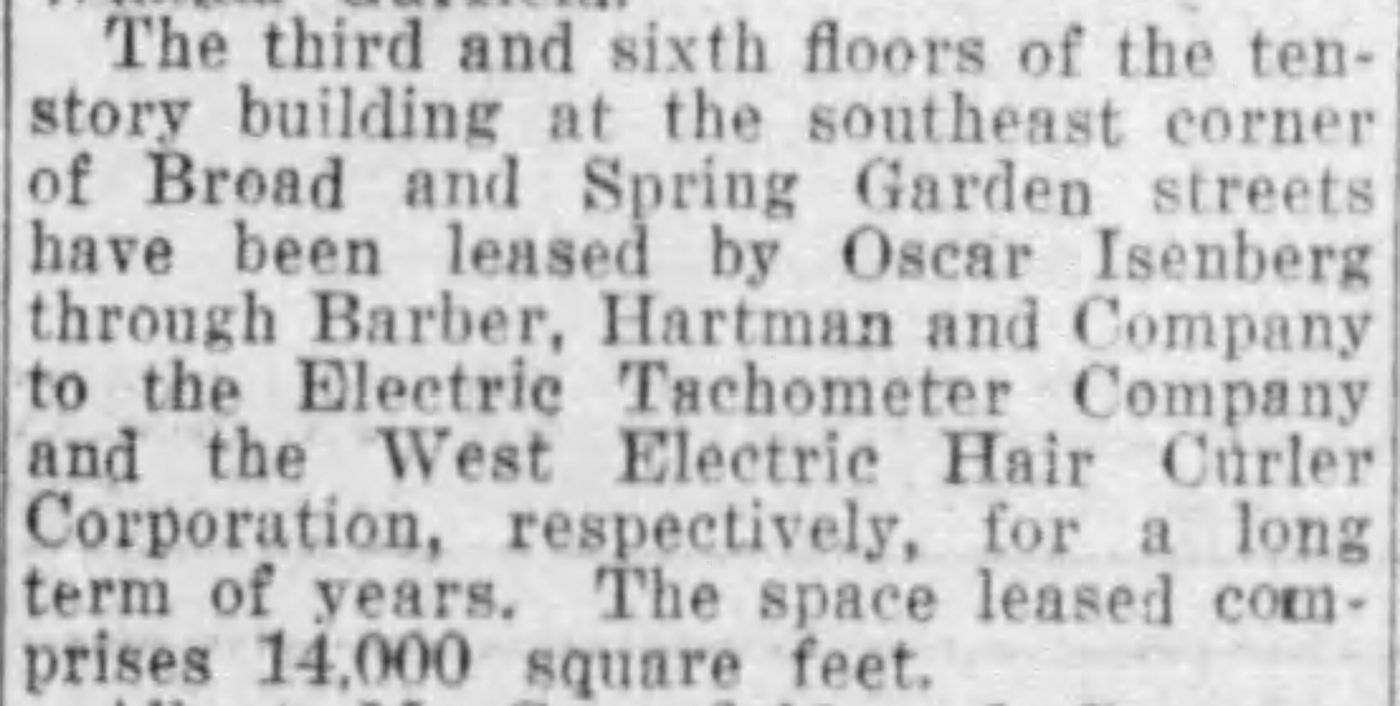
Upstairs the floors were lofts. Electric Tachometer took the whole fifth floor in 1913 (~8,000 square feet) and was still packing spare parts on the third in 1943. Jacob Reed’s Sons cut wartime uniform coats on 8 and 9. Lincoln Silk and then Victory Knitting ran circular machines on 9. Superior Knitting wound silk on 7. Sydmaur Uniform made coats on 10. King Card addressed envelopes on 4. The Philadelphia Mechanical and Electrical School taught auto work from a Spring Garden entrance — they called it the Spring Garden Building.
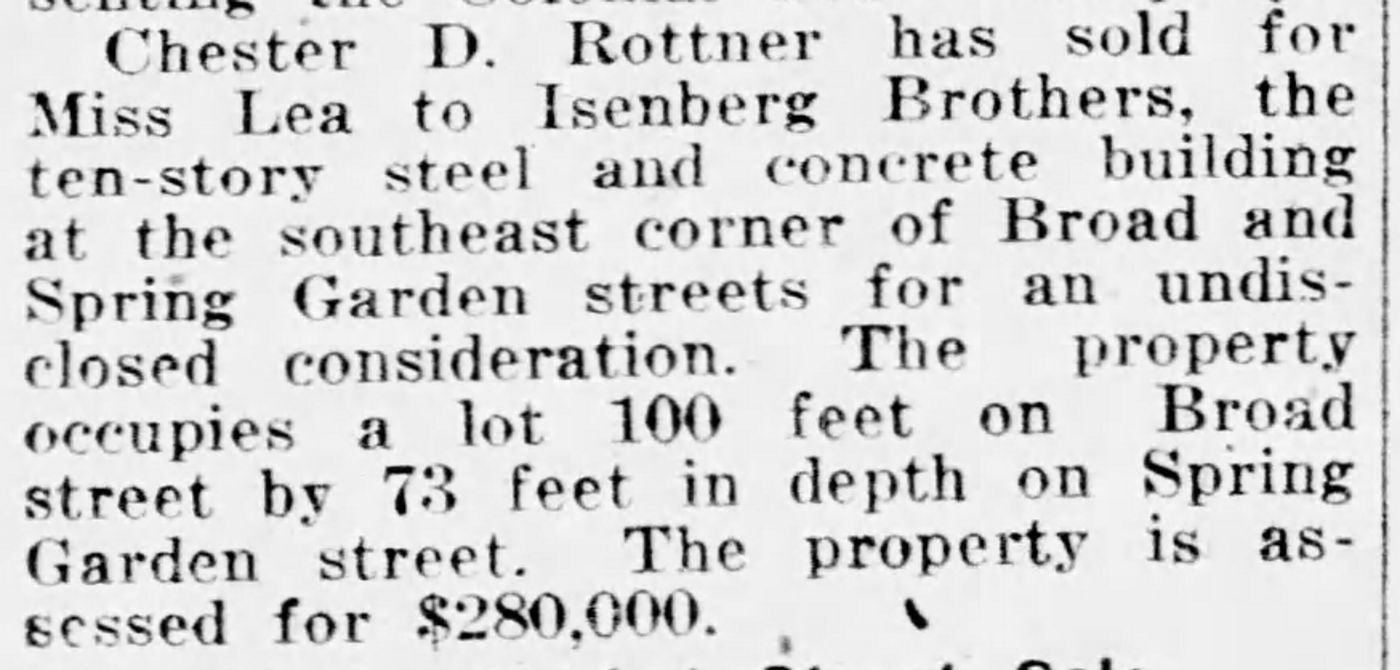
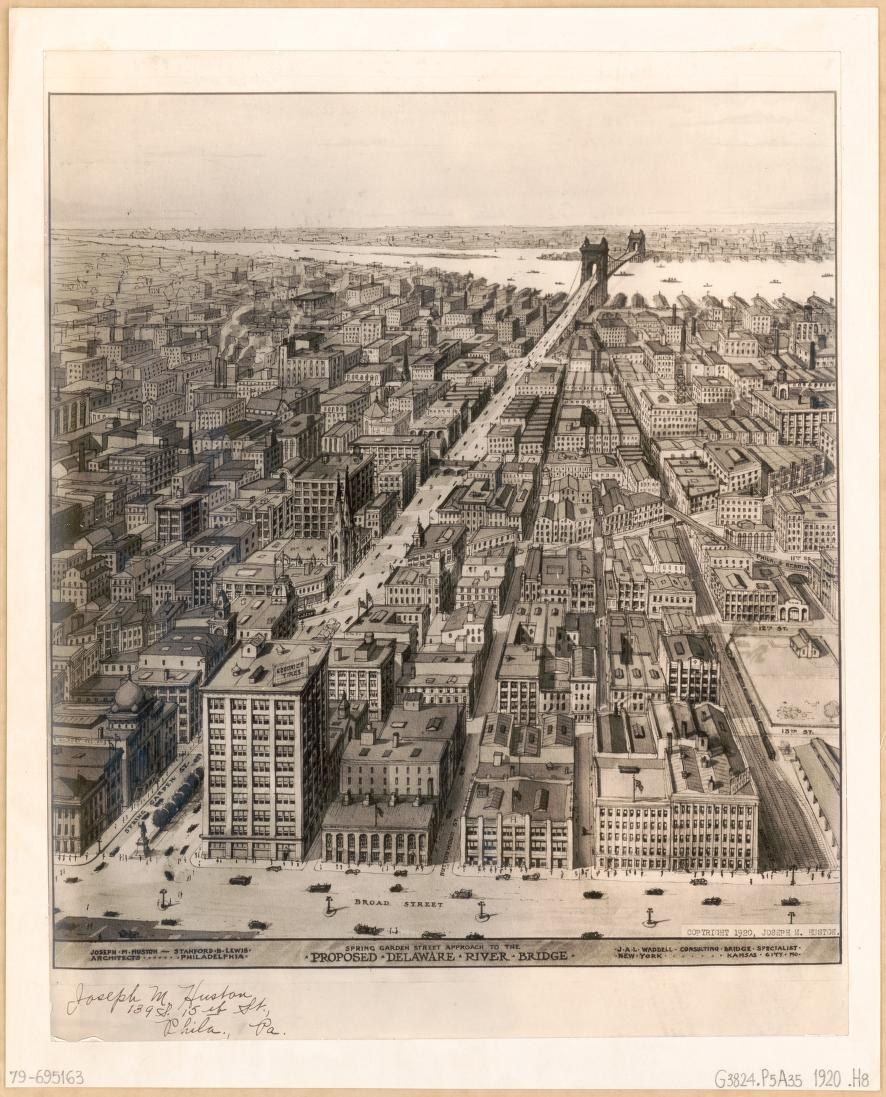
In October 1919 Miss Lea sold the finished tower to Isenberg Brothers (about 100 feet on Broad by 73 on Spring Garden, assessed $280,000). A 1920 bird’s-eye by Joseph M. Huston shows this ten-story corner in the foreground of a proposed Spring Garden approach to a Delaware River bridge — the bridge later opened on Vine Street instead. A 1924 rental ad still listed ~7,300 square feet a floor, light on all four sides — apply at 513.
Headquarters, offices, then homes
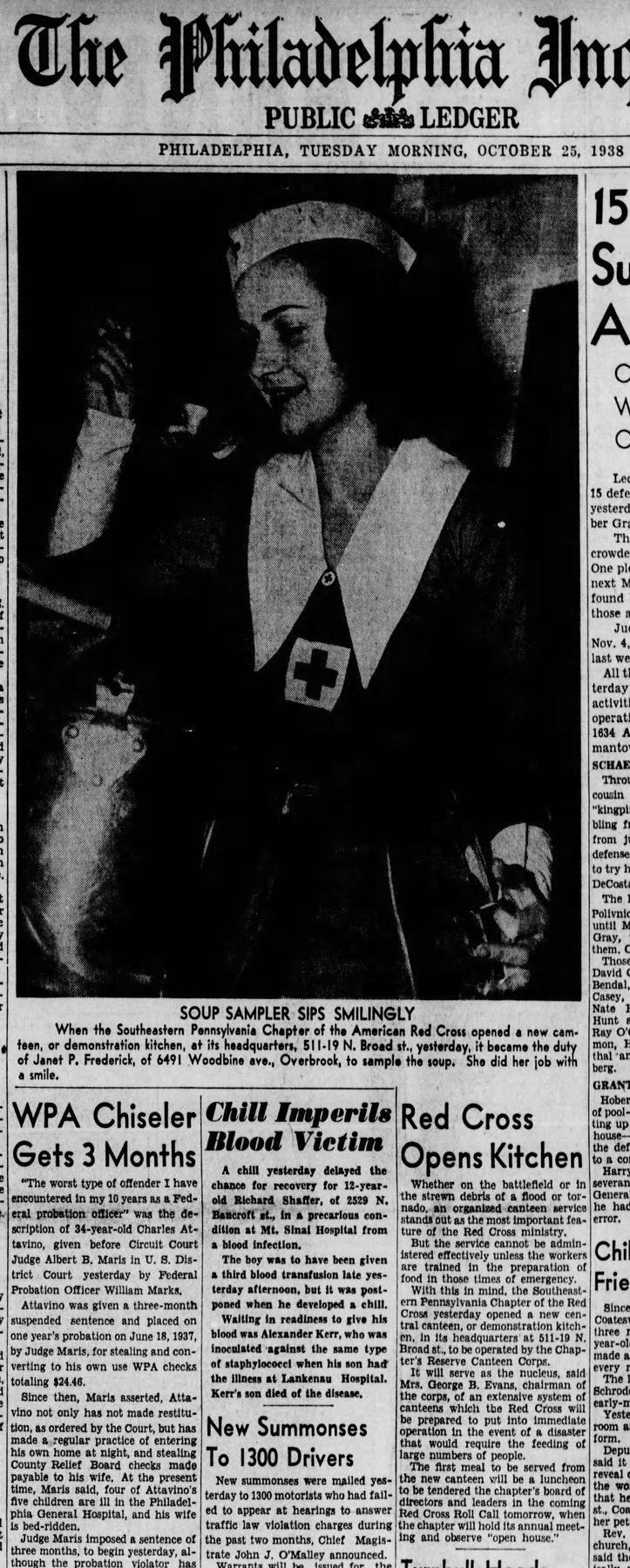
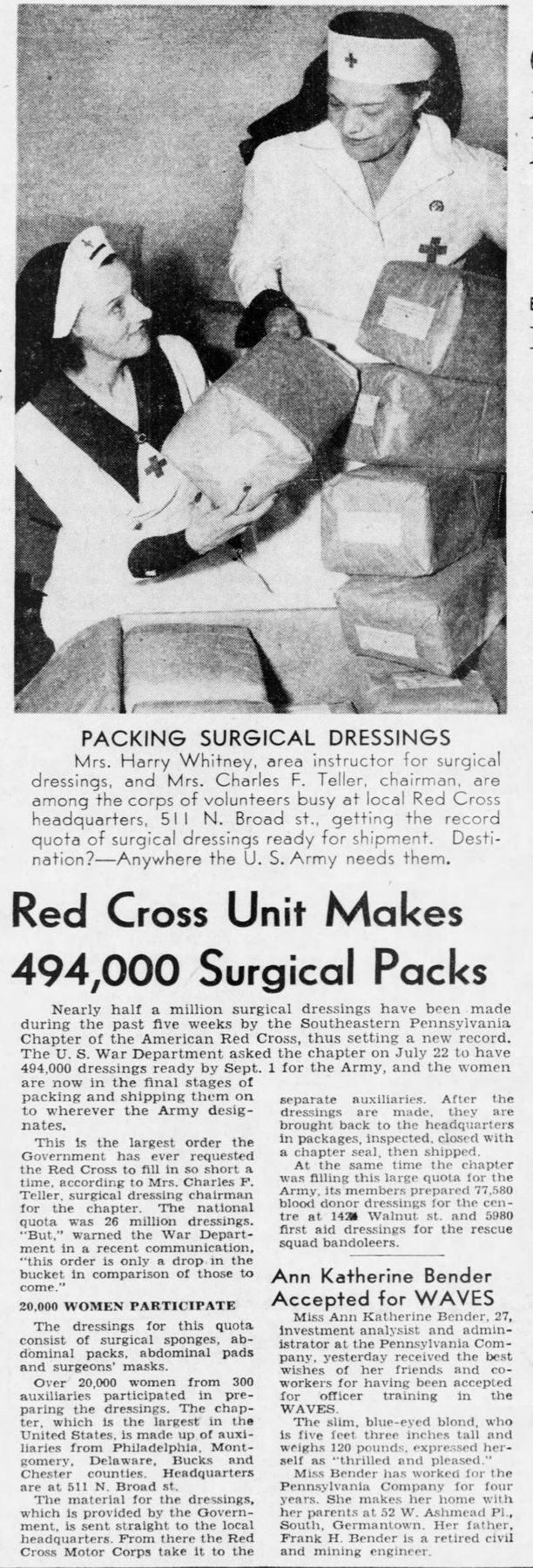
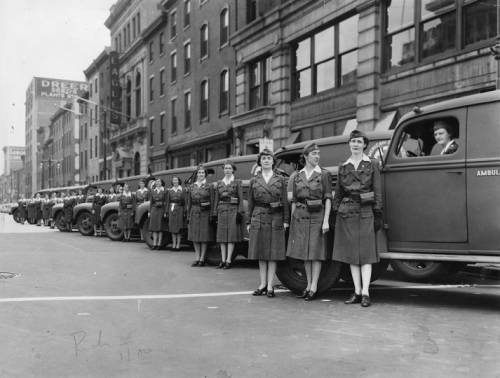
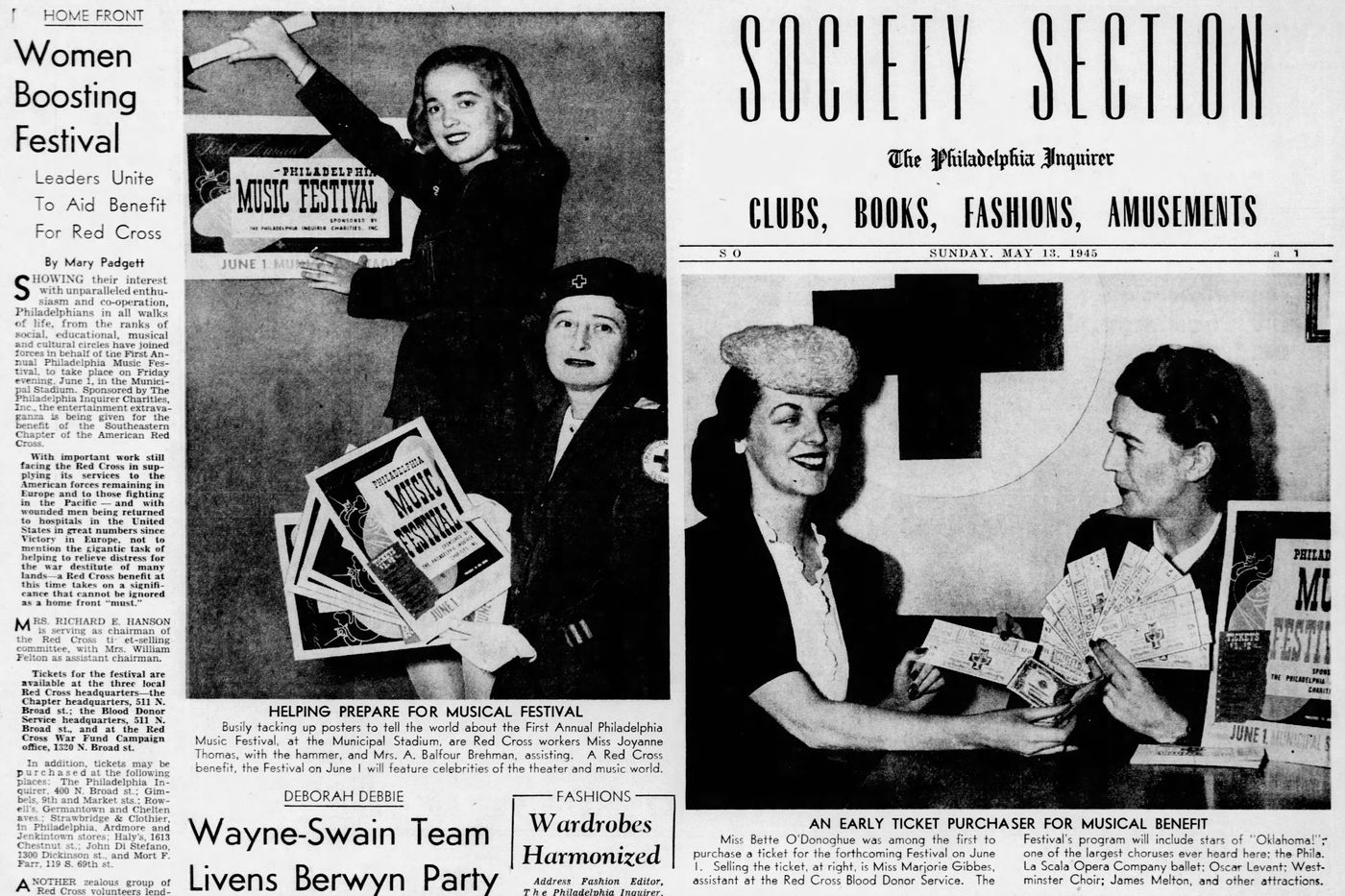
In October 1938 the Southeastern Pennsylvania Chapter of the American Red Cross opened headquarters here — canteen, open house, and later nurse recruiting from 511 N Broad. That is why Motor Corps ambulances could line the curb in November 1942, and why volunteers packed nearly half a million surgical dressings in this building. By April 1945 the chapter occupied six floors; after the building sold they were told to vacate four of them.
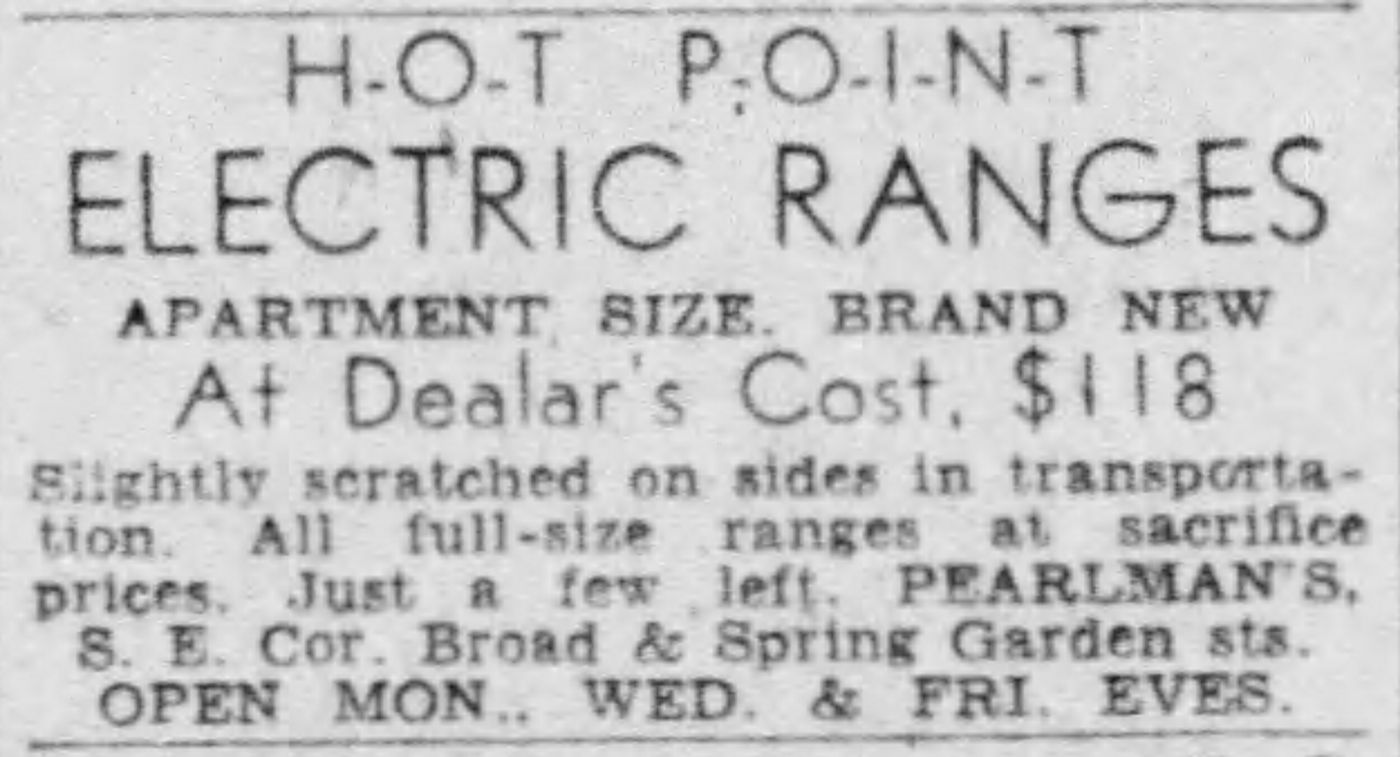
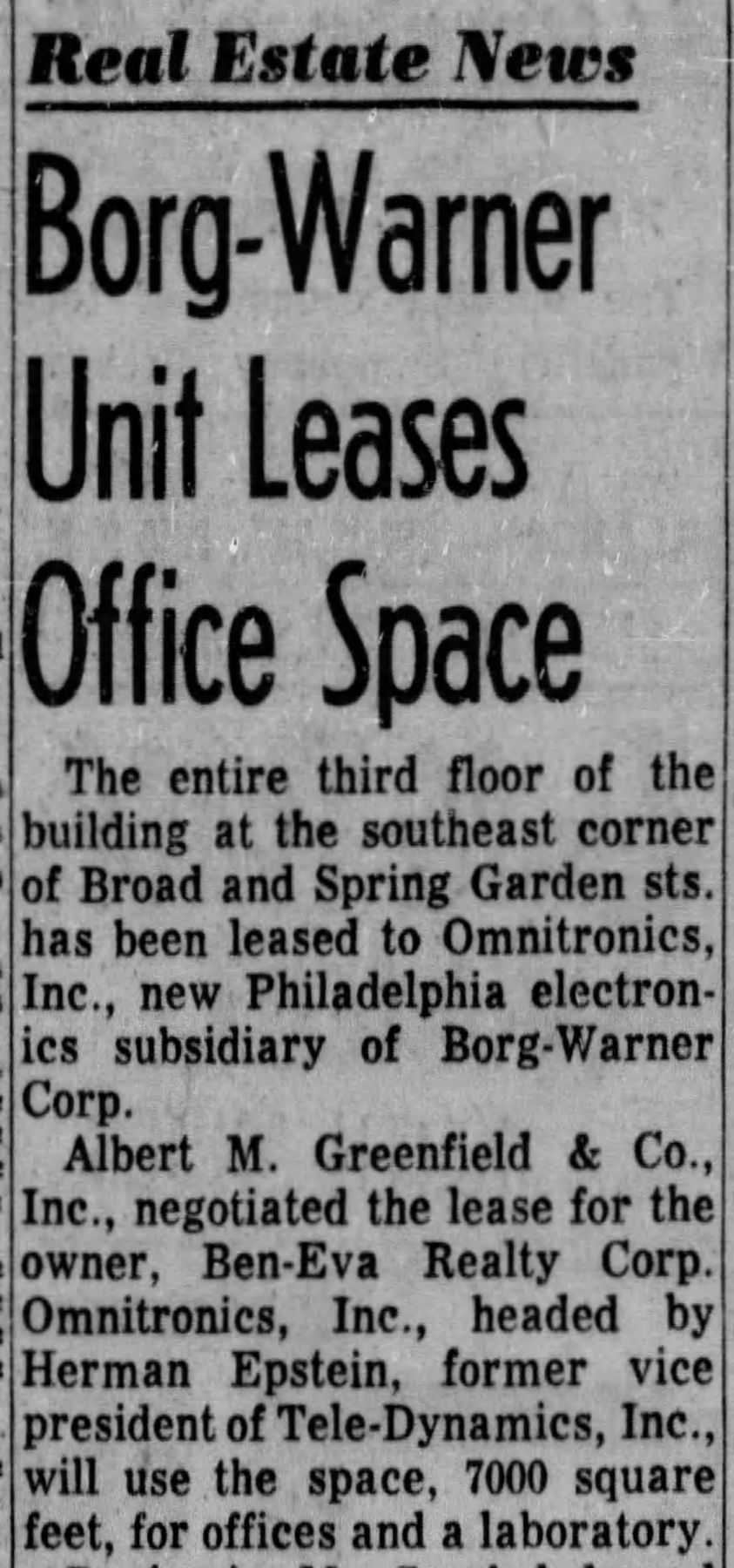
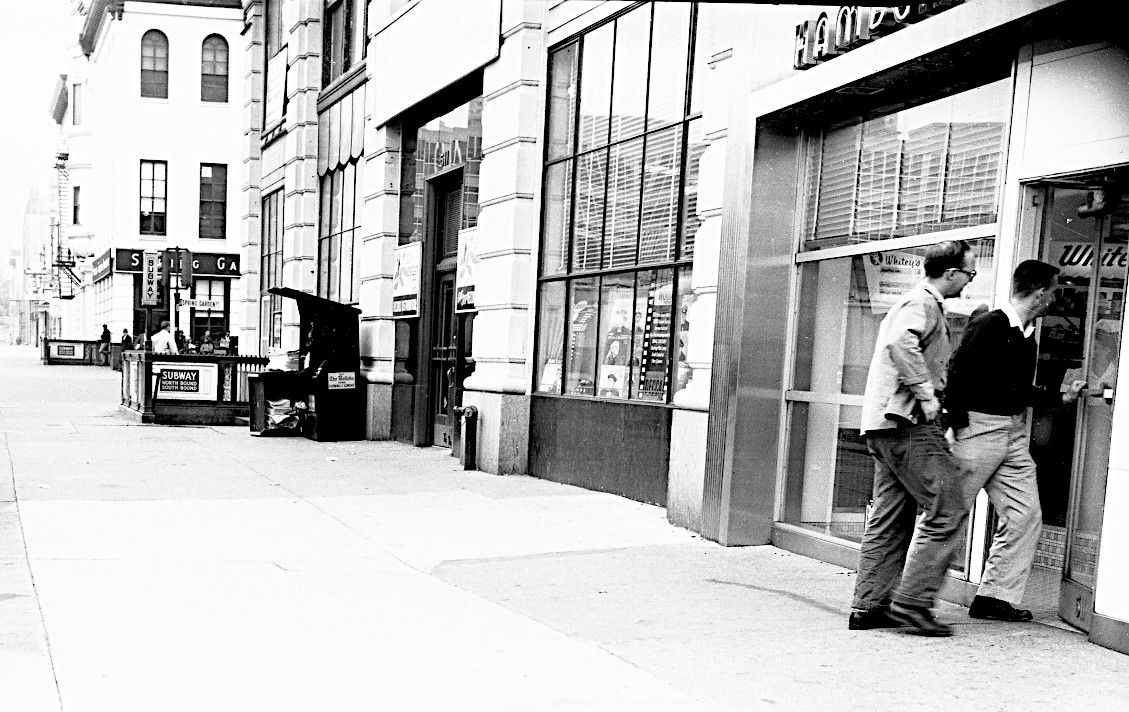
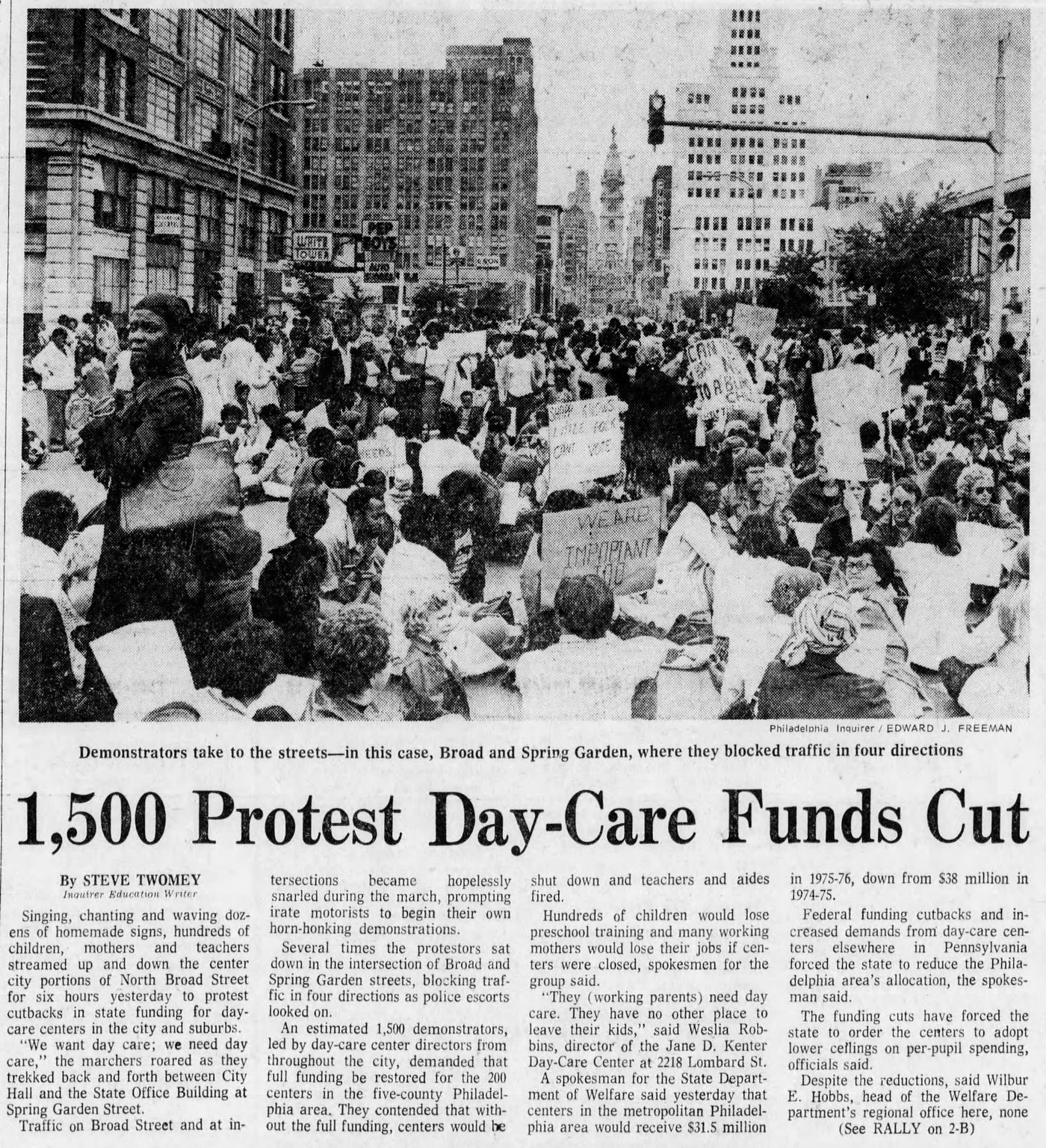
After the war the lofts shifted: Pearlman’s appliances on the corner by 1948; four floors advertised at once (28,000 square feet, $1.15 a foot); Yawn School of Photography; Royal Typewriter’s service shop; an office-equipment repair school; Burroughs Adding Machine on 7 and 8 for offices and experimental laboratories. Yellow Cab recruited here; by 1962 papers were calling this the Yellow Cab Building when William Penn Business Institute moved in. Borg-Warner’s Omnitronics took the whole third floor. The Spring Garden corner shop was a White Tower Hamburgers through the 1960s and 1970s — the porcelain front and hamburger sign show in the 1962 street photos and again in a 1975 clip looking south on Broad. Shap’s Corner Luncheonette later took that same bay. General Electric’s printer-reader group was here in 1967.
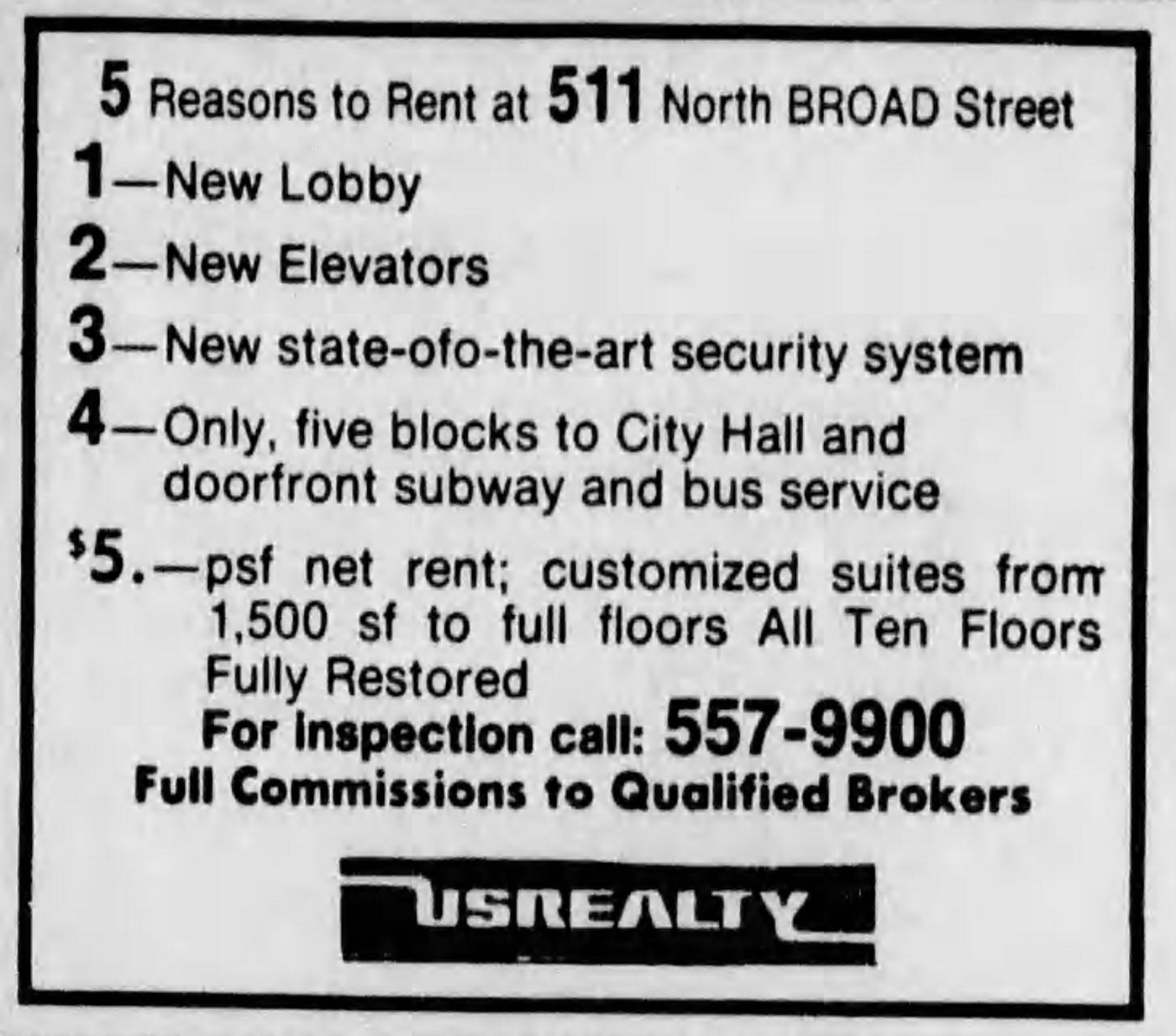
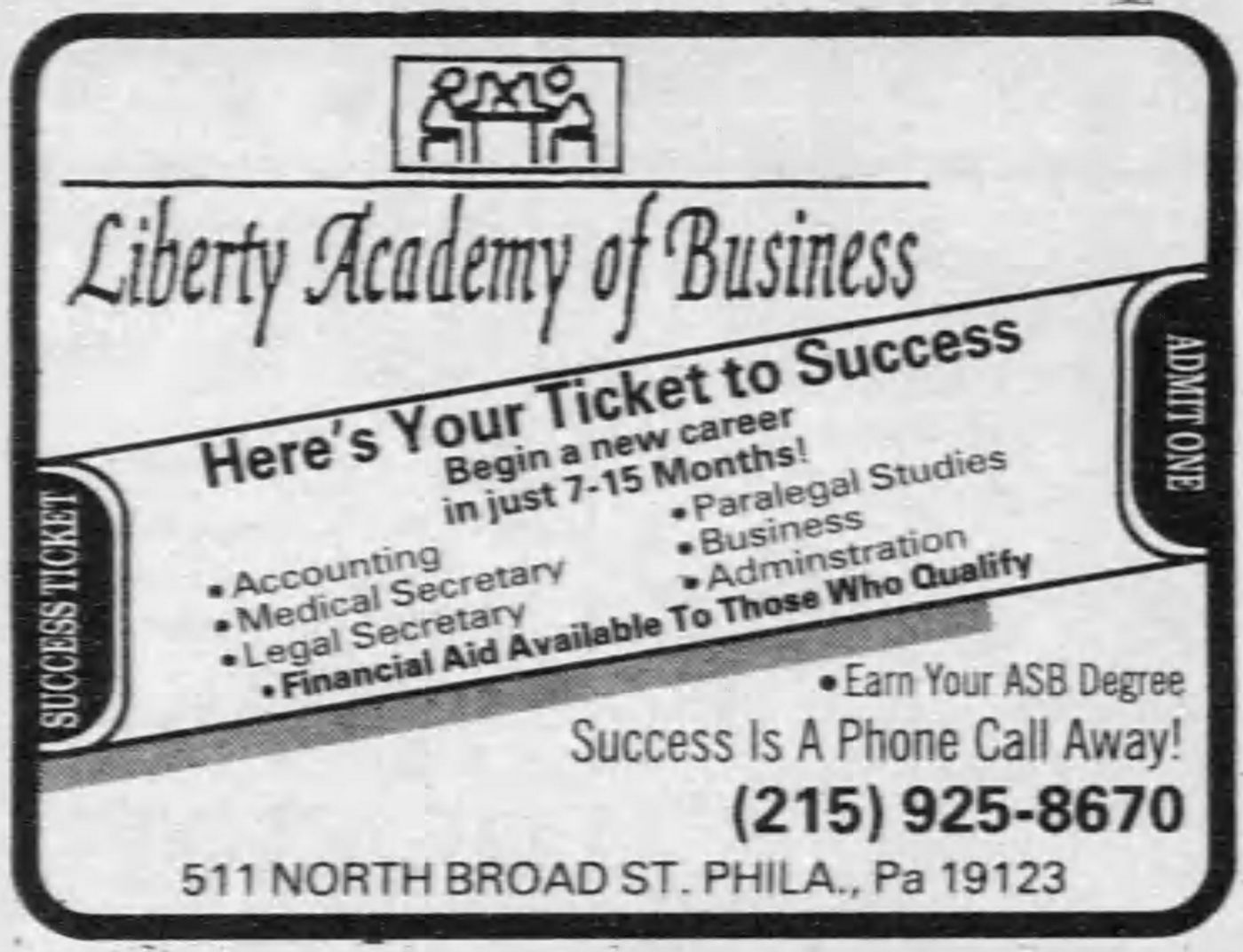
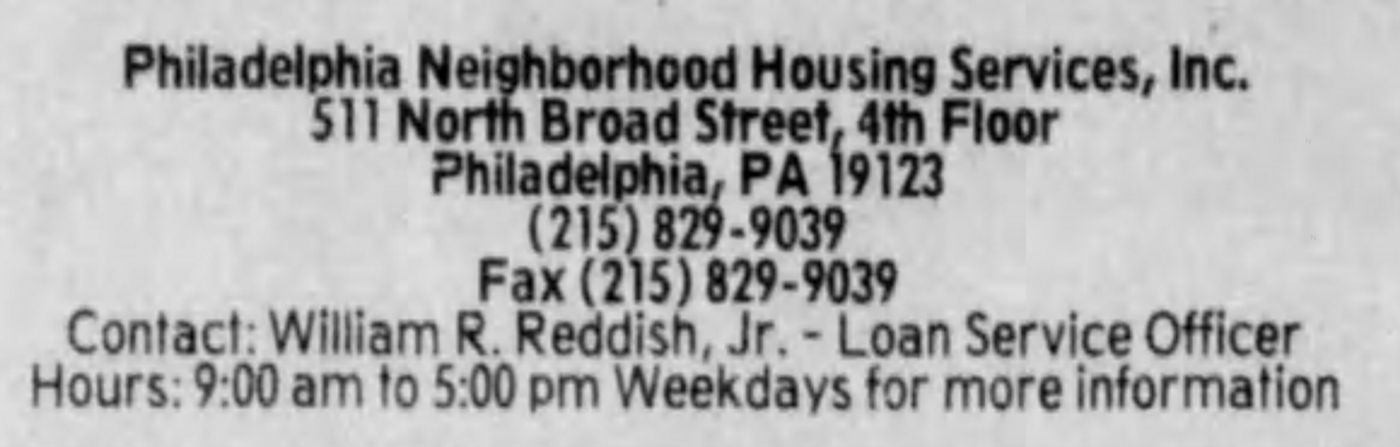
By the late 1980s the tower was an office building again: Phila Water Resources on 7, a 1989 restoration of lobby, elevators, security, and all ten floors. Phone-book listings from that same era put USRA Construction here and Spectra Engineering on the 6th floor — tenants the newspapers never advertised. Philadelphia Neighborhood Housing Services dedicated a revived headquarters at suite 601 in 1989 and was still listed on the 4th floor in 1995. The 1990s also brought Liberty Academy of Business, LSMS in 902, and Youth Opportunities Philadelphia on 2. Upper floors stayed offices through 2006.
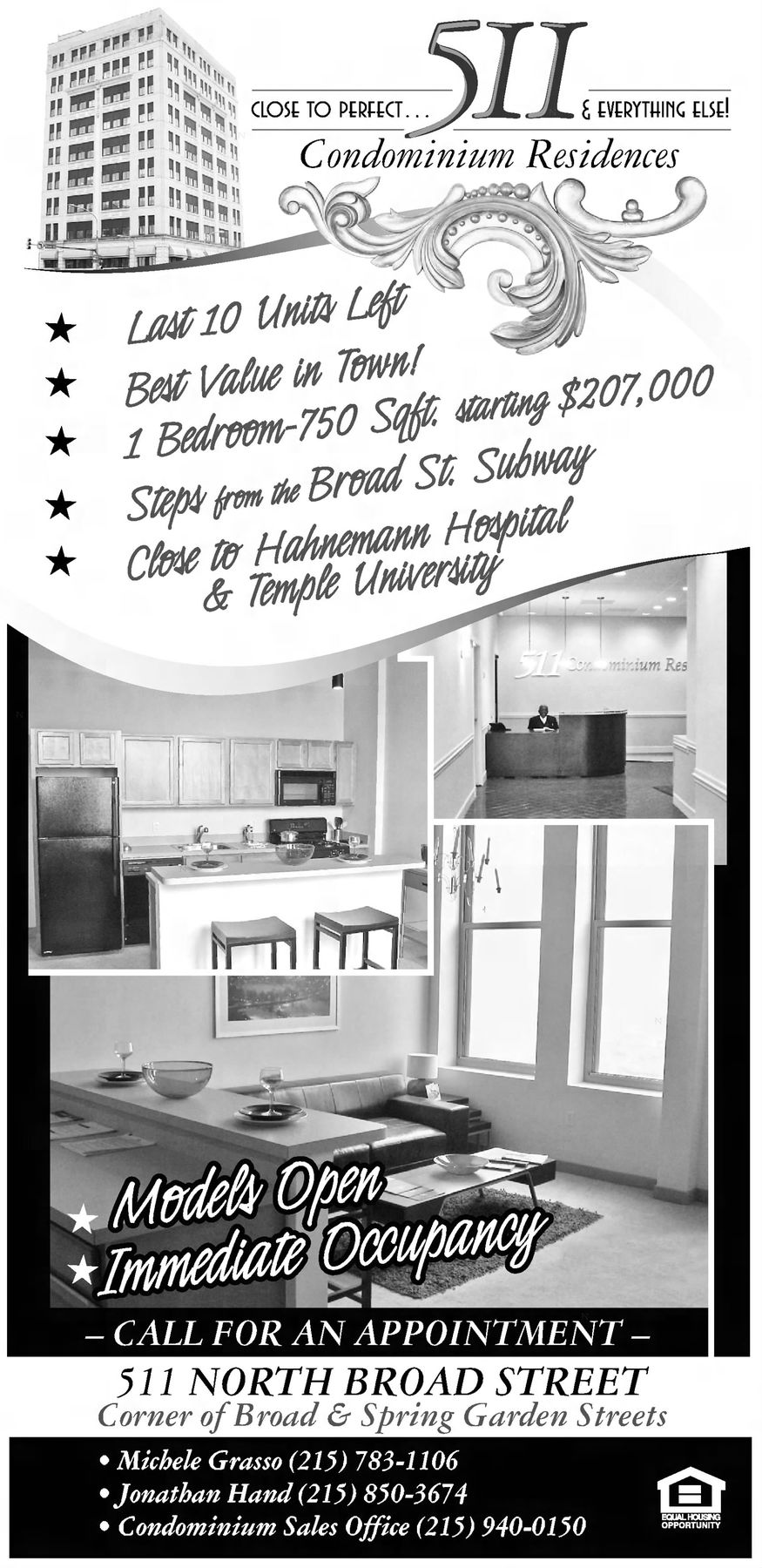
City records still file the lot as 511–19 N Broad (map registry 003N200215). The condominium parcel originated 13 December 2005 — 67 deeded units. L&I permits in January–March 2007 fit out NovaCare on the first floor (sprinklers, electrical, powder rooms) and issued temporary occupancy for floors 7–10 in February and floors 4–6 in March. An Inquirer ad that March still sold the “last 10 units,” one-bedrooms from about $207,000. NovaCare and Shap’s Corner Luncheonette held the Spring Garden shops in the early condo years — Shap’s in the old White Tower bay. Later permits cover roof cell antennas (2008–11), removal of a roof water-tank base (2019), another NovaCare interior (2024), and a façade restoration (2026).
Sources: period Inquirer, Evening Public Ledger, and Daily News (1909–2007); Bell Telephone white and yellow pages and later business listings (USRA Construction; Spectra Engineering, 6th floor); Philadelphia Fed Cascade (August 1989) for Neighborhood Housing Services at suite 601; City of Philadelphia Atlas / Department of Records (parcel 003N200215, 67 condos) and L&I permits for 511–19 N Broad; Department of Records street photos; Watson & Huckel drawings at the Historical Society of Pennsylvania (Bc 615/W 331a); Joseph M. Huston’s 1920 Spring Garden bird’s-eye at the Library of Congress; Philadelphia Architects and Buildings. Reverse (address) telephone directories for this block are not fully online — Free Library Newspaper & Microfilm Center holds Philadelphia Address Telephone Directories, 1927–1969, and Cole’s reverse directories, 1973–2007.
Photos and newspaper clips in date order. Same-year pictures are grouped so this page stays short — click a group and flip through. Filter by type or chapter; the bar stays put as you scroll.